
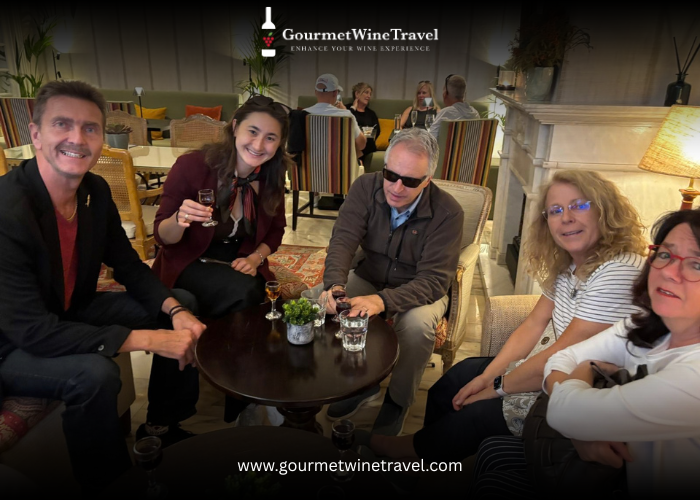
Seven days, two wine regions and one very long toast. That is the short version of our Portugal Alentejo Wine Tour 2026, which ran from 6 to 12 October with Armin H. Müller, the Zurich-based sommelier known as “The White Glove Sommelier”.
This is a look back at what we visited, what we tasted and ate, and why the trip works so well for travellers from Switzerland. If you are thinking about a future departure, it will show you exactly what a week with Gourmet Wine Travel feels like.
What Was the Portugal Alentejo Wine Tour 2026?
The Portugal Alentejo Wine Tour 2026 was a seven-day guided wine journey through Portugal’s Tejo and Alentejo regions, from 6 to 12 October 2026. The group started in Lisbon with a Fado dinner and visited Bacalhôa Buddha Eden, Quinta S. João Batista, Quinta do Casal Branco, Herdade do Esporão, Quinta do Quetzal, Herdade dos Grous, Vicentino and Caves Velhas. Along the way there was time in Évora, regional dinners and a stop in Cascais. Armin guided in English and German. The price is available on request.
Why Tejo and Alentejo Together?
Many wine trips stay in one place. This one deliberately paired two regions that sit side by side but taste quite different.
Tejo lies just north-east of Lisbon along the river. It is a practical, rewarding region with a long winemaking history, and it is close enough to the capital that the trip begins and ends without long transfers.
Alentejo is further south: wide, warm, and covered in cork oak and olive trees. Its wines are known for being generous and approachable.
Tasting them back to back is the best way to understand Portuguese wine. You notice how climate, soil and landscape change the glass, and you do not need any prior knowledge to do it.
Why Swiss Travellers Love This Trip
Switzerland and Portugal connect easily. Lisbon is a short flight from Zurich and Geneva, so you spend your time tasting rather than travelling. Portugal is also in the Schengen area, which keeps entry simple for Swiss citizens (always confirm the current rules before you go).
There is a language advantage as well. Gourmet Wine Travel is run from Switzerland, and Armin guides in German and English. You can ask a technical question about tannins or oak and get a clear answer in your own language.
And the return flight made the point nicely. On the way home, the group flew past Mont Blanc and had a clear view of it from the plane, a neat reminder of how close these two wine countries really are.
The Journey, Stage by Stage
Day 1: Lisbon and a Fado welcome
The trip opened in Lisbon with a traditional Fado dinner. If you have never heard Fado live, it is one of the best ways to begin a week in Portugal. The music is emotional and unpolished, and it sets a warm tone for a group meeting for the first time.
Explore the tour highlights here: Day 1
Day 2: Bacalhôa Buddha Eden and Quinta S. João Batista
From Lisbon we headed out of the city to Bacalhôa Buddha Eden, a large and surprising garden that makes a good first outing before the real tasting begins. After that came Quinta S. João Batista, our first proper winery visit and the start of the Tejo part of the journey.
Explore the tour highlights here: Day 2
Day 3: Tejo and Alentejo estates
The middle of the trip was the heart of it. We visited a run of remarkable estates, including:
- Quinta do Casal Branco, representing Tejo
- Herdade do Esporão, one of Alentejo’s best-known names
- Quinta do Quetzal, in the Alentejo
- Herdade dos Grous, also Alentejo
Each estate has its own character, from larger, established producers to smaller, quieter ones. That variety kept every tasting feeling new.
Explore the tour highlights here: Day 3
Day 4: Évora
Évora is the historic centre of the Alentejo, and a good place to slow down. We walked its old streets, took in the architecture and enjoyed regional Portuguese cooking. It breaks up the winery days well, and it gives you the local context behind the wine.
Explore the tour highlights here: Day 4
Day 5: The coast, Vicentino and Cascais
Heading toward the coast, we visited Vicentino, a winery where the Atlantic influence shapes the style of the wines. We then reached Cascais, a charming seaside town, for the final part of the trip.
Explore the tour highlights here: Day 5
Day 6: Caves Velhas, the last winery
Caves Velhas was our final winery visit. Ending a trip at a historic cellar is a good choice. After a week of different styles, it gave the group a quiet moment to reflect on everything they had tasted.
Explore the tour highlights here: Day 6
Day 7: Farewell
The trip closed with departures from Lisbon, and for the Swiss contingent a view of Mont Blanc on the flight back.
Explore the tour highlights here: Day 7
Wineries We Visited
For anyone searching for the exact list, here it is:
- Bacalhôa Buddha Eden (garden visit and Bacalhôa tasting)
- Quinta S. João Batista
- Quinta do Casal Branco
- Herdade do Esporão
- Quinta do Quetzal
- Herdade dos Grous
- Vicentino
- Caves Velhas
The Food and Hospitality
Wine tourism only works when the food is as good as the wine, and Portugal makes that easy. Regional dishes, local cheeses and slow, relaxed meals were a daily pleasure, and the hospitality at each stop was warm and unhurried.
Armin’s role matters here. He explains why a wine works with a certain dish, so you start to understand pairings rather than just enjoy them. By the end of the week, most of the group were choosing wines at dinner with real confidence.
Is This a Luxury Wine Tasting Tour?
If you are comparing luxury wine tasting tours, the honest answer is that the luxury here is in the pacing and the access. You travel by private coach, stay in well-chosen hotels, visit estates in small-group format and have a sommelier at your side from start to finish.
It is relaxed, personal and well-organised, rather than formal. Gourmet Wine Travel also offers worldwide wine tours across Italy, Spain, Georgia, South Africa, Ireland and more, so the planning draws on a lot of experience.
Who Is This Tour For?
- Beginners who want to learn in a friendly setting
- Experienced wine lovers who want to compare two regions
- Couples and friends looking for a shared week away
- Solo travelers who prefer a small, hosted group
- Swiss travelers who want German-language guiding and a short flight
Who Is This Tour For?
Based on the published program, the tour includes six hotel nights with breakfast, dinners, a modern coach for the duration, entrance fees, and taxes and fees. Flights are not included. For the latest price, contact Gourmet Wine Travel.
Frequently Asked Questions
When did the Portugal Alentejo Wine Tour 2026 take place?
It ran from Tuesday 6 to Monday 12 October 2026.
Which regions did the tour visit?
The Tejo and Alentejo wine regions, with the group starting in Lisbon and finishing in Cascais.
Which wineries were included?
Bacalhôa Buddha Eden, Quinta S. João Batista, Quinta do Casal Branco, Herdade do Esporão, Quinta do Quetzal, Herdade dos Grous, Vicentino and Caves Velhas.
Who guided the tour?
Armin H. Müller, “The White Glove Sommelier”, a diploma sommelier based in Switzerland. Guiding is in English and German.
How far is Lisbon from Switzerland?
It is a short flight from Zurich or Geneva. Check current schedules with your airline.
Is the tour suitable for beginners?
Yes. Tastings are guided and the pace is relaxed.
Will there be another departure?
Gourmet Wine Travel runs Portugal tours regularly. Contact them for upcoming dates.
What is the cancellation policy?
The booking terms state that payment is binding and that no refund is given on cancellation. Take out cancellation insurance or arrange a substitute participant.
Conclusion
Seven days, two remarkable wine regions and a lot of good food: our Portugal Alentejo Wine Tour 2026 showed how well Tejo and Alentejo work together. From the Fado dinner in Lisbon to the final tasting at Caves Velhas, each day brought a new perspective on Portugal’s wine culture, and the flight home past Mont Blanc was a fitting end.
Recent Comments