Select Page
Ireland Tour 2026: A Gourmet Journey Through Ireland

Ireland Tour 2026: A Gourmet Journey Through Ireland

​​

The Ireland Tour 2026 is a 7-day guided gourmet journey that starts and ends in Dublin. You taste whiskey at three distilleries (Pearse Lyons, Midleton and Skellig Six18), beer at Smithwick’s in Kilkenny, and Irish wine at Wicklow Way Wines. You also see Powerscourt Gardens, Glendalough, the Waterford Greenway, Cork, the Ring of Kerry and the Lakes of Killarney. A private coach covers roughly 900 km, you stay in five hotels over six nights, and every day includes a planned lunch and dinner. Guests from Switzerland and Germany can reach Dublin by lunchtime with one connection through Frankfurt.


Why Choose Ireland for a Gourmet Journey?

Ireland is small enough to cross in a week and rich enough to fill it. Within a few hours’ drive you can taste whiskey in a restored church, walk through a monastic ruin, swim in a bay and drink Irish coffee in a village pub.

A guided trip takes away the planning. The coach and driver are arranged, the reservations are made, and the days are paced so you have time to relax. You arrive, eat well and enjoy the scenery.

For guests from Switzerland and Germany, the trip is also easy to reach. One connection through Frankfurt puts you in Dublin in time for the first afternoon.

Day 1: Dublin and Pearse Lyons Distillery

The journey begins in Dublin. After arriving, you check in at the Hilton Dublin Kilmainham, your base for the first night.

The highlight of the day is the Pearse Lyons Distillery. It sits inside a restored church, so you get Irish history, church architecture and whiskey distilling in one stop. It is one of the most unusual tastings in the country and a good way to start.

In the evening you have dinner together at the hotel and talk through the first day. Nothing is rushed, which is the right pace for a first night.

Explore the tour highlights here: Day 1

Day 2: Powerscourt, Wicklow Wines and Glendalough

Day two takes you south into County Wicklow, often called the Garden of Ireland.

Powerscourt House and Gardens

After breakfast and check-out, you visit Powerscourt House and Gardens. The terraces and mountain views make it a calm start to the day.

Wicklow Way Wines

You continue through Wicklow for lunch, then visit Wicklow Way Wines for a tour and tasting. Wine is not the first thing people link with Ireland, and that is why this stop works. A small local producer shows you a side of Irish food culture most visitors never see.

Glendalough

Next is Glendalough, a historic monastic site set between two lakes. You explore the ruins and enjoy the views around the cathedral and the Lower Lake.

You then drive to Kilkenny, check in, take some time to relax and finish the evening with dinner at Rive Gauche Restaurant.

Explore the tour highlights here: Day 2

Day 3: Kilkenny, Smithwick’s and the Waterford Greenway

Smithwick’s Brewery

The day starts with a morning walk through Kilkenny, a medieval city that is easy to explore on foot. Then you visit Smithwick’s Brewery for a well-organised tour and an Irish beer tasting. It shows how deep Ireland’s brewing tradition runs, and it is a nice change from whiskey.

Dungarvan and the Waterford Greenway

After lunch, the route heads south to Dungarvan and the Waterford Greenway. You make a photo stop and a whiskey stop here to enjoy the Atlantic atmosphere.

Garryvoe and Ballycotton Bay

In the afternoon you arrive in Garryvoe on the East Cork coast. If you feel brave, you can swim in Ballycotton Bay. Later the group shares a wine aperitif overlooking the coastline, followed by dinner at the hotel. Many guests say this was their favourite evening.

Explore the tour highlights here: Day 3

Day 4: Midleton Whiskey, Cork and Killarney

Old Midleton Distillery

After breakfast you drive to Midleton, home to one of Ireland’s best-known whiskey traditions. At the Old Midleton Distillery you take an immersive tour, followed by a whiskey tasting.

Lunch and Cork City

A short walk brings you to Ferrit & Lee for lunch. Then you continue to Cork for a relaxed city walk through one of Ireland’s liveliest towns.

Later you travel to Killarney and check in at the Gleneagle Hotel, where you stay for two nights. The evening is free, so you can rest after a full day.

Explore the tour highlights here: Day 4

Day 5: The Ring of Kerry, Skellig Six18 and Killarney Nights

Day five is the scenic day.

Ring of Kerry

After breakfast you set off along the Ring of Kerry, one of Ireland’s best-known coastal drives, with sea views and green hills on both sides. Lunch is at Dooley’s Restaurant.

Skellig Six18 Distillery

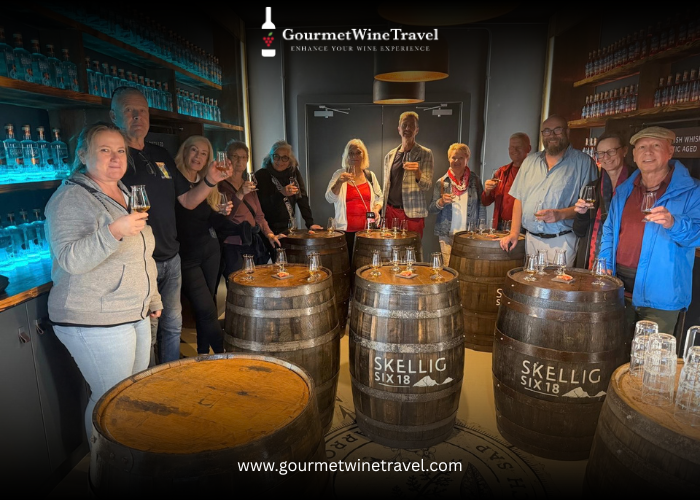
In the afternoon you reach Skellig Six18 Distillery in Cahersiveen for a guided tour and whiskey tasting. It is a young distillery on the Atlantic edge, and it makes a nice contrast to the older names of Dublin and Cork.

A Red-Door Pub and Irish Coffee

On the way back you stop at a charming pub with a red door, visit the small museum and enjoy a traditional Irish coffee. It is a simple stop, and many guests remember it well.

You return to Killarney to relax at the Gleneagle Hotel, then head out for dinner at Danny Mann Pub, a lively spot with good food and music.

Explore the tour highlights here: Day 5

Day 6: Killarney Lakes, Adare and Back to Dublin

Lakes of Killarney Boat Tour

After breakfast and check-out, you go to the Lakes of Killarney. From Ross Castle you board the MV Lily of Killarney for a scenic boat tour. The water is calm in the morning, and the mountains are close.

Lunch in Adare

You then continue to Adare, one of Ireland’s prettiest villages. Lunch is at the Blue Door Restaurant. After a short stop in Portlaoise, you arrive at the Talbot Hotel Stillorgan near Dublin.

The evening is for your final dinner and a last drink at the bar. It is a warm way to close the trip.

Explore the tour highlights here: Day

Day 7: Departure from Dublin

On the final morning you pack, check out early and head to Dublin Airport.

What You Will Eat and Drink

  • Whiskey: Pearse Lyons, Old Midleton and Skellig Six18
  • Beer: Smithwick’s in Kilkenny
  • Wine: a tasting at Wicklow Way Wines, plus a wine aperitif on the Cork coast
  • Food: hotel dinners, pub classics, coastal lunches and a full Irish breakfast each morning
  • Something warm: traditional Irish coffee in Kerry

Practical Tips for Swiss and German Travellers

  • Flights: Book early. Zurich–Frankfurt–Dublin works well for a lunchtime arrival.
  • Currency: Ireland uses the euro, so there is nothing to exchange.
  • Weather: Pack a light rain jacket. Irish weather can change within the hour.
  • Shoes: Comfortable walking shoes matter most, especially at Glendalough.
  • Swimwear: Bring it along. The bay swim in Garryvoe is optional but popular.
  • Plugs: Ireland uses UK-style Type G sockets, so bring an adapter


Frequently Asked Questions

How long is the Ireland Tour 2026?

It runs seven days, with six hotel nights.

Which regions does the tour cover?

It covers Dublin, County Wicklow, Kilkenny, County Cork and County Kerry, then returns to Dublin.

Is this a wine tour or a whiskey tour?

It is mainly a whiskey and culture journey, with beer and wine included. You visit three distilleries, one brewery and one Irish wine producer.

Do I need a driving licence?

No. A private coach and driver handle all transfers.

How much walking is involved?

Most days include an easy walk. Glendalough and the city walks in Kilkenny and Cork are the longest, and none of them is hard.

Can I join if I don’t drink alcohol?

Yes. The gardens, monastic sites, coastal drives and boat tour are all part of the trip, and tastings can be skipped.

Is Ireland a good destination for food and drink lovers?

Yes. Small producers, fresh seafood, welcoming pubs and a strong whiskey tradition make it one of Europe’s most rewarding food destinations.

Conclusion

The Ireland Tour 2026 pairs Ireland’s best-known drinks with its landscapes and villages. You taste whiskey where it is made, walk through gardens and ruins, swim in a bay and end the days over dinner with good company. It suits anyone who likes travel with a story behind every stop.
Wine and Food Pairing Basics You Should Know Before Your Next Dinner

Wine and Food Pairing Basics You Should Know Before Your Next Dinner

​​

Good wine and food pairing comes down to three things: matching weight, balancing acidity, and letting regional dishes lead you to their regional wines. You don’t need a sommelier’s memory to get it right at home—a light Swiss white next to fish, a structured red next to a hearty stew, and a sparkling wine next to anything salty will take you further than most guides admit. If you want to see these rules in action rather than just read about them, a wine travel trip through Lavaux or Valais, or an evening at a sushi wine & dine event in Zurich, is the fastest way to learn.


Why Wine and Food Pairing Actually Matters

A dinner can be good on its own and better with the right glass beside it. That’s really the whole idea behind pairing—not rules for their own sake, but two things on the table that make each other taste more like themselves. A crisp Chasselas next to a plate of perch from Lake Geneva doesn’t just taste fine; it tastes like the lake it came from. Get the pairing wrong, and neither dish nor wine is ruined, but you’ve missed a small, easy pleasure that costs nothing extra to get right.

Most people already do this instinctively without calling it pairing. You reach for something crisp with fried food, something bolder with red meat. The basics below just put a name to instincts you probably already have, so you can apply them with a little more confidence next time you’re staring at a wine list or a cellar shelf.

The Core Principles of Pairing Wine with Food

Match Weight with Weight

A delicate dish gets overpowered by a heavy wine, and a rich dish makes a light wine disappear. Think of weight as texture and intensity rather than alcohol level: a butter-poached fish wants a wine with a similarly gentle body, like a Fendant from Valais, while a braised short rib can stand up to a dense Syrah from the Rhône. When in doubt, match the wine’s body to how the dish feels in your mouth, not just what it’s made of.

Balance Acidity

Acidity in wine works like a squeeze of lemon on the plate—it cuts through fat, lifts flavor, and resets your palate between bites. This is why a high-acid white like a Swiss Chasselas or a Riesling works so well with creamy sauces, fried foods, or anything from the sea. If a dish already leans acidic, such as a vinaigrette-dressed salad, choose a wine with matching or higher acidity so the wine doesn’t taste flat next to the food.

Consider Sweetness and Salt

Salt softens tannin and can make an otherwise sharp red taste rounder, which is part of why cured meats and aged cheese pair so naturally with structured reds. Sweetness works the opposite way with heat and spice: a touch of residual sugar in the wine tames chili and keeps a dish from tasting one-note fiery. A slightly off-dry white alongside Thai or Sichuan food does more work than most people expect from a ‘dessert’ style wine.

Regional Pairings Work for a Reason

“What grows together, goes together” isn’t just a saying wine guides repeat for atmosphere—it holds up because regional cuisines and regional wines developed side by side, shaped by the same soil, climate, and local ingredients. Raclette and a Valais Fendant, fondue and a young Swiss white, fresh perch, and a Lavaux Chasselas: these pairings weren’t invented by a marketing team; they were worked out over generations at the same tables.

Common Pairing Mistakes to Avoid

  • Serving big reds with delicate fish, which drowns out the fish entirely
  • Choosing wine based on the protein alone and ignoring the sauce, which usually drives the pairing more than the meat or fish itself
  • Serving reds too warm and whites too cold, which hides the qualities you’re trying to pair for in the first place
  • Assuming one wine has to work for an entire multi-course meal instead of adjusting glass by glass
  • Overlooking dessert wine entirely, then wondering why the sweet course feels unfinished

 Wine Travel in Switzerland: Where Pairing Comes Alive

Reading about pairing only gets you so far. Switzerland happens to be one of the easiest places in Europe to actually taste these principles side by side, because the vineyards, the cellars, and the kitchens sit within a short drive of one another.

Lavaux and Lake Geneva

The terraced vineyards above Lake Geneva are a UNESCO World Heritage site, and they’re also a working demonstration of regional pairing. A glass of Chasselas tasted on a terrace overlooking the lake, alongside a plate of féra or perch fillets pulled from that same water, shows the weight-and-acidity principle better than any chart could.

Valais and the Rhône Valley

Further along the valley, Valais brings a different climate and a different set of pairings—Fendant with raclette, Petite Arvine with mountain cheeses, and structured reds like Cornalin that hold their own against game dishes from the surrounding alpine villages. A guided wine travel itinerary through this region typically moves from cellar to table in the same afternoon, so the theory and the meal happen almost back-to-back.

Zurich’s Sushi Wine & Dine Event

Not every useful pairing lesson comes from a vineyard. In Zurich, the Sushi Wine & Dine event takes a format most guests don’t expect—Japanese cuisine paired with fine European white wines rather than sake—and turns it into one of the more memorable ways to learn acidity and minerality in a single sitting. Each course arrives with a wine chosen to do a specific job: a crisp Riesling to cut through the richness of fatty fish, a mineral white to echo the clean, oceanic character of the dish beside it. It’s a small, guided evening rather than a lecture, which is exactly why the lessons stick.

How to Practice Pairing Before Your Next Dinner Party

You don’t need a cellar or a sommelier certificate to get better at this. Buy two wines of noticeably different weight and try each one against the same dish—you’ll taste the mismatch immediately when one overwhelms the food and the other gets lost. Keep a bottle of something crisp and Swiss on hand as a default for anything fried, creamy, or seafood-based, since high acidity solves more problems than any other single trait. And when the opportunity comes up, book a tasting or a small guided dinner rather than relying on trial and error alone—watching a sommelier explain a pairing in real time teaches more in one evening than months of guessing at home.

Frequently Asked Questions

What is the golden rule of wine and food pairing?

Match the weight of the wine to the weight of the dish first, then check that the acidity levels are close. Most pairing failures come from ignoring one of these two factors, not from picking the ‘wrong’ grape variety.

Does white wine always go with fish and red wine with meat?

It’s a reasonable starting point but not a rule. A rich, oily fish like salmon can handle a light-bodied red, and a delicate white meat dish can pair beautifully with a soft, low-tannin red served slightly cool. Texture and sauce matter more than the color of the protein.

What Swiss wines are easiest to pair with a wide range of dishes?

Chasselas from Lavaux and Fendant from Valais are both known for being food-friendly across a wide range of dishes, thanks to their moderate body and clean acidity. They’re a safe, versatile choice if you’re only bringing one bottle to a mixed-course dinner.

Is a Sushi Wine & Dine event worth trying if I usually drink sake with sushi?

Yes—it’s precisely the contrast that makes it worthwhile. Pairing sushi with fine white wine rather than sake highlights acidity and minerality in a way sake doesn’t, and most first-time guests describe it as changing how they think about both the food and the wine afterward.

How can I learn pairing hands-on rather than from a guide like this one?

Guided wine travel through a region like Lavaux or Valais, or a small, structured event such as a Sushi Wine & Dine evening, puts you in front of the pairing rather than just describing it. Tasting the mismatch and the match back-to-back is what makes the principles stick.

Conclusion

Wine and food pairing isn’t a test you can fail at your own dinner table. Match weight to weight, let acidity do its job, and lean on regional pairings when you’re unsure—that covers most situations you’ll run into. Switzerland makes it easy to take these basics further than a dinner party, whether that means a terrace above Lake Geneva with a glass of Chasselas in hand, a cellar visit in Valais, or a seat at a Sushi Wine & Dine evening in Zurich. However you get there, the fastest way to understand pairing is still to taste it.