
Most people think they know a wine after the first sip. Then they stand in the vineyard where it grew, meet the family that has farmed those vines for decades, and realize the glass was only the beginning.
Wine is a story about soil, weather, food, and the people who stay with a place for generations. That’s why the best wine destinations are never just about the bottle. This guide looks at what makes a wine trip worth taking, starting in Switzerland and moving out across the world.
The best wine destinations pair great wine with food, scenery, and local tradition. For Swiss travelers, Ticino is the easiest start: a three-day trip from Zurich with family estates, Merlot, and rare local grapes. Further out, Georgia, Portugal, and Italy reward the longer flight. Guided group wine tours handle the planning and the driving, so you can simply taste.
Why Wine Tastes Different When You Travel
A wine tasted at home has lost its context. On location, the context is the point. You see the slope that ripens the grapes, hear how a winemaker talks about a difficult vintage, and eat the dish the wine was always meant to sit beside.
Food matters just as much. A tasting paired with a regional lunch teaches you more in an hour than a shelf of books, because you learn why a wine is built the way it is.
Taste Begins With Place
Grapes take on the character of their soil, climate, and altitude. Standing in a vineyard turns those words into something you can see. A steep terrace, a lake breeze, or a warm valley floor explains more than any tasting note.
Tradition Lives in the Cellar
Many producers worth visiting still work the way their families always have. You meet people, not brands. Those conversations stay with you long after you’ve forgotten the score on the label.
Switzerland: A Wine Country Hiding in Plain Sight
Switzerland makes excellent wine, but very little of it leaves the country, so many visitors never taste it at all. That’s a loss, because the range is wide for such a small place.
Lavaux, Valais, and Geneva
The terraced vineyards of Lavaux, above Lake Geneva, are a UNESCO World Heritage site. The Valais, tucked between high Alpine peaks, is the country’s largest wine region. Geneva and Montreux round out western Switzerland, with lakeside towns that make easy bases for tasting.
Ticino: The Mediterranean Soul of Switzerland
South of the Alps, Ticino feels different. Italian is spoken, the food is lighter, and Merlot leads the vineyards. Gourmet Wine Travel calls Ticino the Mediterranean soul of Switzerland, and the glass backs it up. You can taste Bondola, an old local grape, alongside Nebbiolo, Viognier, and a rare 100% Marselan.
A Wine Trip Without the Flight
For anyone living near Zurich, this is the appeal. You step onto a coach in the morning and you’re tasting by lunchtime. There are no airports, no rental car, and no designated driver to worry about.
What a Three-Day Ticino Wine Tour Looks Like
Gourmet Wine Travel runs a Switzerland-Ticino tour hosted by Armin H. Müller, a Zurich-based Diplom Sommelier known as The White Glove Sommelier. It leaves from Zurich by modern coach, so nobody drives. Here’s how the days run:
- Day 1: Settemaggio in Monte Carasso for the Marselan, then Azienda Mondò for Bondola from vines over 80 years old. Dinner follows at Cantina alla Maggia in Ascona, where the estate also makes what the site describes as the first whisky in Ticino.
- Day 2: Tenuta San Giorgio for classic-method sparkling wine, lunch at Tenuta Castello di Morcote above Lake Lugano, a guided walk through Lugano’s old town, and a multi-course dinner in a vaulted cellar.
- Day 3: Trapletti in Coldrerio. Enrico Trapletti won the Grand Prix du Vin Suisse in 2004 and brought Nebbiolo back to the Mendrisiotto. Then it’s back to Zurich.
The Castello di Morcote vineyard deserves a mention of its own. It sits about 200 meters above the village among castle ruins, and the site calls it one of the most beautiful vineyards in Ticino.
You sleep two nights at the 4-star Hotel La Tureta, a restored 17th-century palace in Giubiasco. Breakfast, two dinners, and three light lunches are included. Tailor-made versions of the tour need at least six participants, so it suits friends, clubs, and colleagues.
The Best Wine Destinations Beyond Switzerland
Once Ticino has you hooked, the world opens up. Worldwide wine tours range from a long weekend to a full week abroad, and each destination earns its place for a different reason.
Georgia: Where Wine Began
Georgia is often called the cradle of wine, with archaeological finds suggesting winemaking goes back about 8,000 years. Producers still ferment and age wine in clay vessels called qvevri, buried in the ground. UNESCO recognized the method as intangible cultural heritage in 2013. The seven-day Georgian itinerary runs from Tbilisi through Kakheti into the Great Caucasus, with about six winery visits, a qvevri demonstration, and a traditional Supra feast. Flights from Switzerland arrive in the evening, so the first night is easy.
The visits go beyond big names. One stop is Zurab Kviriashvili’s estate, founded in 2002, which farms 2.5 hectares biodynamically with 12 qvevris. Another is Château Mukhrani, founded in 1878, where the trip ends with a cellar tour and a farewell dinner.
Portugal, Italy, and Spain
Portugal’s Alentejo and the Porto and Douro regions are on the program. So are Italy’s Veneto, Emilia-Romagna, Friuli Venezia Giulia, and Valtellina, plus Spain’s Catalunya and Rioja. Add Germany, Greece, South Africa, California, and Champagne, and you can see why one operator can offer something for every palate.
Group Wine Tours or Tailor-Made Luxury?Wineries We Visited
Both work. The right choice depends on who’s traveling and what you want from the week.
Why Group Wine Tours Work
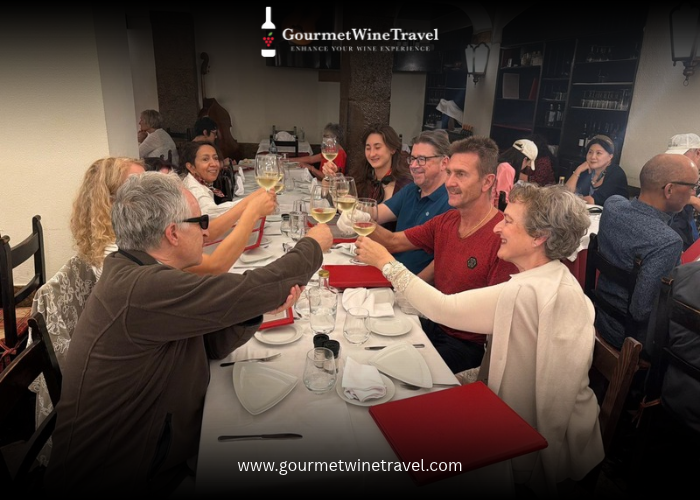
Group wine tours take care of the parts that make wine travel stressful: routes, bookings, and driving. Guests don’t drive, so everyone can taste properly without worrying about their license. The tours suit any level, because the host explains the grapes, the winemakers, and the food pairings as you go. You also meet fellow travelers. A guest on the Veneto trip praised the group and called the value optimal.
What Luxury Wine Tasting Tours Involve
Luxury wine tasting tours go further: five-star hotels, a Michelin-starred dinner, and winery visits that are hard to arrange alone. Gourmet Wine Travel’s sample Champagne itinerary includes all of that, plus airport transfers and supervision from the first day to the last. The site is direct about it: the higher the budget, the more exclusive the tour. Tailor-made and corporate programs can be adjusted to your dates, budget, and group, subject to hotel and winemaker availability.
How to Choose the Right Wine Trip
- Start with what you like to drink. Crisp whites and big reds point to different places.
- Check what’s included. Look for hotels, meals, transport, and a guide.
- Match the trip to your time. Ticino fits three days from Zurich. Georgia needs a week.
- Look at who leads it. A sommelier host changes how much you learn.
- Read the terms. Payment is a binding booking, and the site recommends cancellation insurance.
FAQ: Best Wine Destinations and Wine Tours
What are the best wine destinations for Swiss travelers?
Ticino is the closest, with a three-day tour from Zurich. For a longer trip, Georgia, Portugal, and northern Italy are strong options.
Do I need wine knowledge to join group wine tours?
No. Hosts explain the grapes, the winemakers, and the pairings, so beginners and enthusiasts both get something from each day.
What do luxury wine tasting tours include?
They typically add upscale hotels, fine dining, and winery access that is hard to get alone. Details vary by trip, so ask for the itinerary before you book.
How do I book a tour with Gourmet Wine Travel?
Register by email with your full address and mobile number, or use the contact page. Payment counts as a binding booking, and the site states there are no refunds, so consider cancellation insurance.
How many people do I need for a tailor-made tour?
Arranged or modified Ticino tours need at least six participants.
When is the best time to visit Swiss wine regions?
Early autumn is harvest season and a lovely time to visit. Check the dates of each tour, since the schedule varies by destination.
Conclusion
The best wine destinations are the ones where a glass leads you to a place, a person, and a meal you wouldn’t have found alone. Switzerland proves you don’t need to fly far to find one. Whether you choose a three-day Ticino trip, a week in Georgia, or a tailor-made luxury program, a guided tour lets you taste without the logistics.
Ready to plan yours? Send a request through the Gourmet Wine Travel contact page and tell Armin which worldwide wine tours caught your eye.
Recent Comments